


Categories
Share
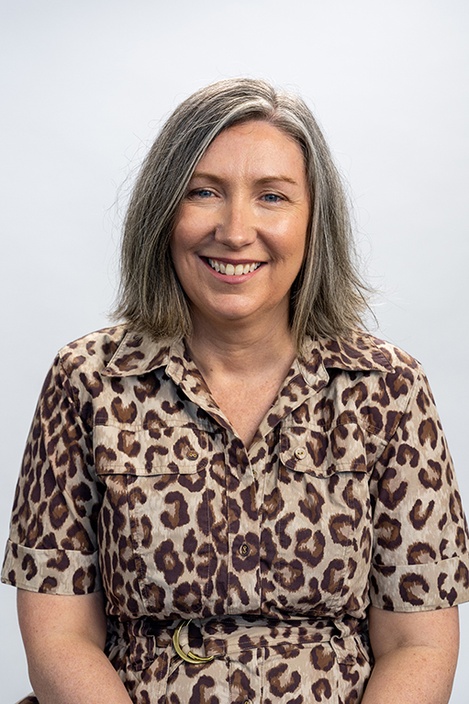
When children tell stories, create characters or recreate scenes from shows they know, they’re making choices about how to represent ideas just as media makers do, explains Dr Amanda Levido, a Southern Cross University researcher in media literacy education.
Quick facts
Media literacy is the ability to critically and creatively engage with the media.
The development of media literacy happens over a lifetime as we experience media both as audiences and creators.
When it comes to children, more intentional media literacy is needed to ensure there are opportunities to question, create and make sense.
ABC Kids invited Dr Amanda Levido to collaborate on content for the ABC Kids Media Literacy in Early Learning Hub.
Media Literacy Week 2026 in Australia runs from October 24 to 31 coinciding with UNESCO’s Global Media and Information Literacy Week.
Dr Levido, from the Faculty of Education, was invited by ABC Kids to collaborate on content for the ABC Kids Media Literacy in Early Learning Hub to mark Media Literacy Week 2026 in Australia.
The materials are aimed at educators to help them support children’s learning.
“Talking with children about what they see, hear and play is one way to help children understand more about the media. The point is to get them to think a little bit more about what they engage with – not take away their enjoyment of the media,” said Dr Levido.
“This can help them understand why people make media, and why people enjoy it.”
“More intentional media literacy is needed to ensure there are opportunities for children to pause, consider, ask questions about the media and create their own media. Children’s own experience are incredibly important springboards for this – we should always start from what children already know and support them deepen their understanding of the media.”
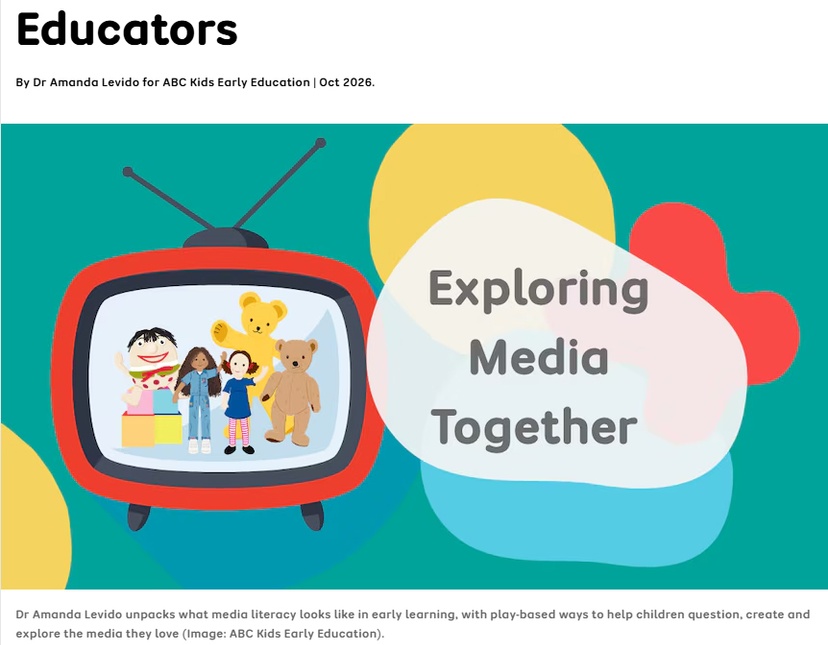
The materials Dr Levido produced are:
- An Introduction to Media Literacy for Educators article unpacks what media literacy looks like in early learning, with play-based ways to help children question, create and explore the media they love
- Exploring Media Together cards: designed for early childhood educators, this set of eight prompt cards offers simple ways to sit alongside children (aged 3-5) as they watch, listen, play and talk about media, to help build children’s media literacy skills and understandings
Dr Levido said media literacy doesn’t appear all at once, whether you’re an adult or a child.
“The development of media literacy happens over our lifetime as we experience media both as audiences and creators. We learn about the media through our engagement. So we might know what happens next in our favourite program because we know the structure it usually follows.”
“But more intentional media literacy is needed to ensure there are opportunities for children to pause, consider, ask questions about the media and create their own media. Children’s own experience are incredibly important springboards for this – we should always start from what children already know and support them deepen their understanding of the media.”
Dr Levido said she was thrilled when the ABC Kids team invited her to contribute.
“ABC Kids is such a trusted source for educators and families. To collaborate with them on these resources shows their commitment to media literacy education for young children. The ideas we developed are informed by research, with the hope that educators can adapt the resources to suit their own context.”
Media contact
Sharlene King, Media Office at Southern Cross University +61 429 661 349 or scumedia@scu.edu.au