


Categories
Share
A Southern Cross University scientist has helped reveal that one of humanity's most enduring ancient relatives was surviving somewhere no one expected: the dense tropical rainforests of southern China, long after it was thought to have vanished from the region.
Quick facts
The study confirms Homo erectus was living in southern China between 324,000 and 184,000 years ago, much later than previously accepted .
Chemical signatures locked in fossil teeth show these ancient humans lived in dense rainforest and may have travelled surprisingly long distances, possibly as far as northern Vietnam and mainland Southeast Asia .
The findings challenge long-held assumptions about how adaptable Homo erectus was and what drove its eventual extinction.
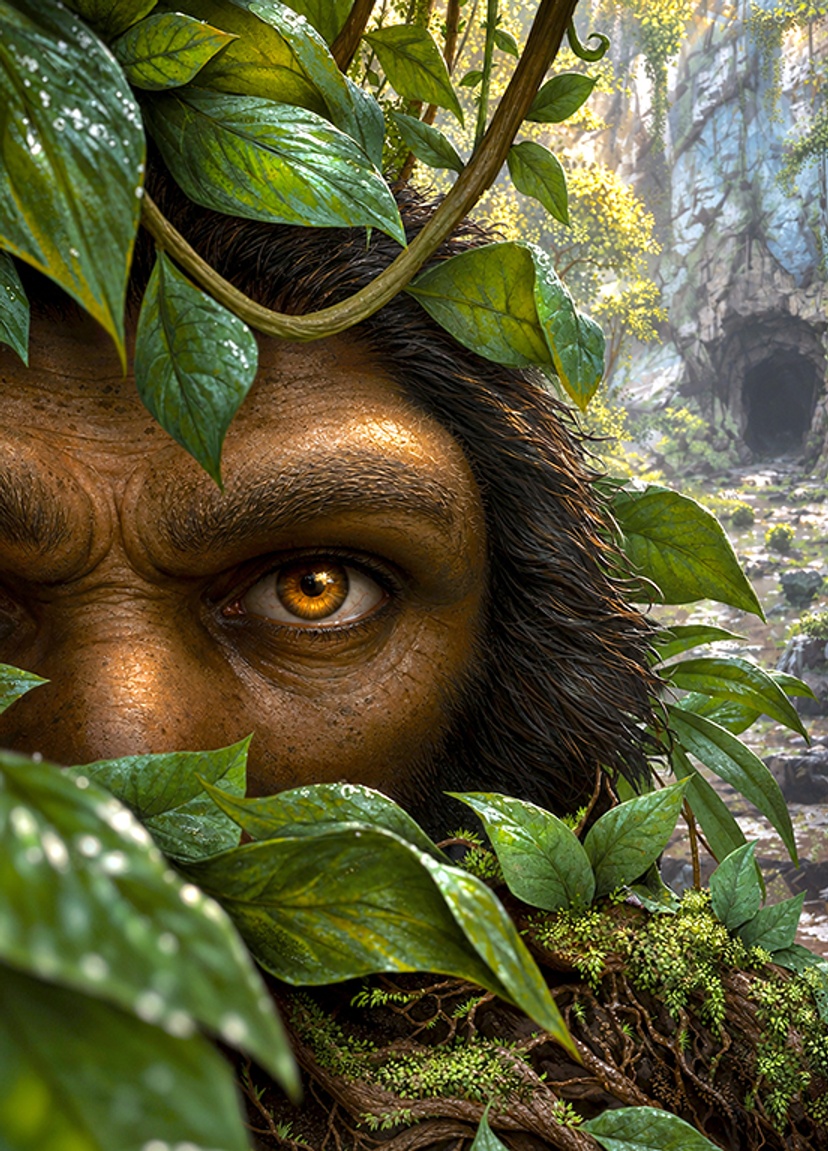
MAIN IMAGE: Illustration of Homo erectus lurking in the shadows of the tropical forest in Guangxi, with the entrance of the Baxian Cave in the background. Credit: Garciart/Joannes-Boyau.
A Southern Cross University scientist has helped reveal that one of humanity's most enduring ancient relatives was surviving somewhere no one expected: the dense tropical rainforests of southern China, long after it was thought to have vanished from the region.
The international team has shown beyond doubt that Homo erectus was still living in southern China between 324,000 and 184,000 years ago, in forest habitats previously thought to be too challenging for these ancient humans and the domain of our own species, Homo sapiens.
Professor Renaud Joannes-Boyau, who is Pro Vice-Chancellor (Research Innovation and Commercialisation) at Southern Cross University, as well as Head of the Geoarchaeology and Archaeometry Research Group (GARG), co-led the international research with colleagues from Australia, China and Europe.
Their work is published in two papers in the journal Nature.
The discovery places southern China at the centre of new debates about the fate of Homo erectus in mainland Asia, and about how adaptable our ancient relatives really were.
Ancient travellers in a rainforest world
Professor Joannes-Boyau's research specialises in dating fossils and reading the chemical signals preserved in teeth. It is this kind of evidence that reveals how these ancient humans moved through their world.
By analysing strontium, a chemical signal in tooth enamel that is linked to the local geology, the researchers found that some individuals may have spent their childhoods moving through forested karst regions (a complex rainforest landscape) across surprisingly large areas, rather than staying close to home.
"Some of the chemical signatures in the fossil teeth point well beyond the immediate cave region, potentially towards northern Vietnam and mainland Southeast Asia," said Professor Joannes-Boyau.
"This suggests these humans were far more mobile than previously recognised.”
“The surprising breakthrough forces us to reconsider what we thought we knew about Homo erectus, and the cause of the species' extinction. Now we have to go back to the drawing board, and answer new questions and conduct new research,” said Professor Joannes-Boyau.
Professor Joannes-Boyau uses specialist equipment in the Biomics Facility, housed at the University’s Lismore campus, to analyse and date fossil teeth.
“With this study, Southern Cross University continues pioneering direct geochemical analyses techniques of human tissues, in particular its application to human evolution research,” Professor Joannes-Boyau concluded.
“The surprising breakthrough forces us to reconsider what we thought we knew about Homo erectus, and the cause of the species' extinction. Now we have to go back to the drawing board, and answer new questions and conduct new research.”

Eight teeth, two caves and a surprising timeline
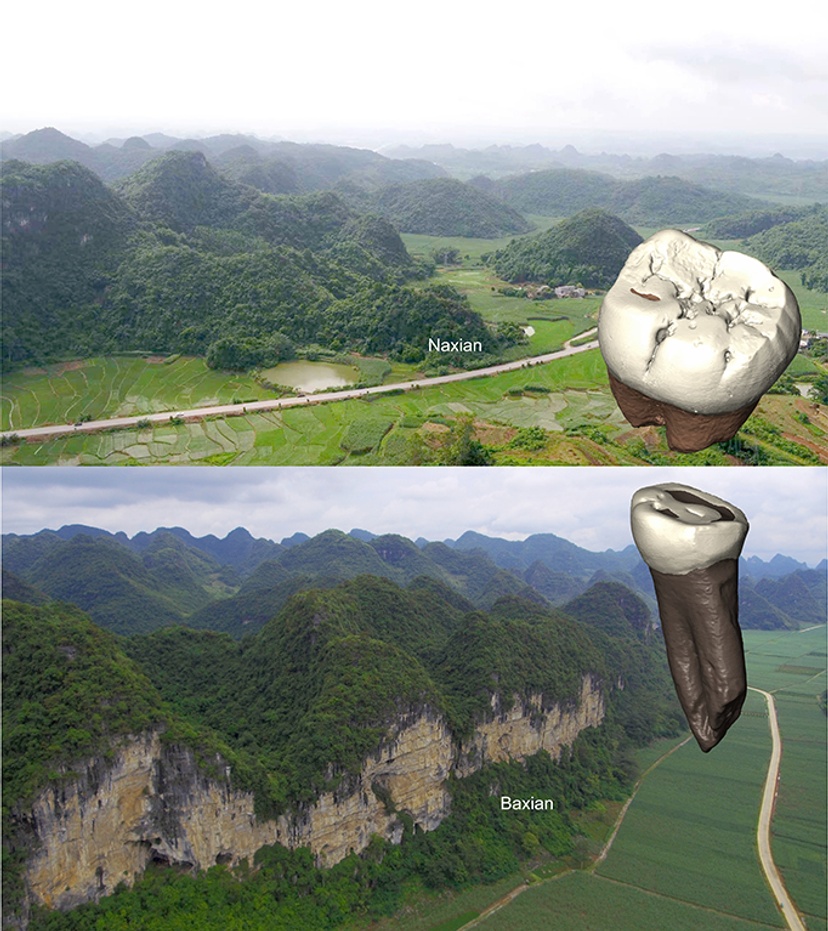
The study focuses on eight human teeth and thousands of other fossils recovered from two sister caves, Baxian and Naxian, in the karst landscapes of Guangxi province in southern China. The caves lie only around 15 km apart in a region of steep limestone hills, caves and tropical vegetation.
The teeth were identified as Homo erectus using both their physical characteristics and ancient genetic signatures. Their age was established using five independent dating techniques applied to the teeth, the surrounding cave sediments and mineral formations. The results place these humans in southern China at a time when they were thought to be already regionally extinct, making the fossils the youngest securely dated evidence for Homo erectus in mainland China.
"This is a fascinating discovery because it confirms the presence of Homo erectus in a location we were not expecting and at a time we hadn't considered," said co-lead author and geochronologist Professor Kira Westaway of Macquarie University.
"This has huge implications for the timeline of Homo erectus as we attempt to understand the causes of its extinction."
Teeth preserve chemical traces of the food and water consumed during life, making them a biological archive of past environments. At Baxian and Naxian, those traces reveal that both the animals and the humans relied on dense tropical rainforest, rather than the open grasslands or woodlands usually associated with Homo erectus.
"The animal teeth and the Homo erectus teeth are telling the same story: these individuals were part of a rainforest ecosystem," said Dr Nicolas Bourgon of the Max Planck Institute of Geoanthropology.
Palaeontologist Professor Yingqi Zhang from the Institute of Vertebrate Palaeontology and Palaeoanthropology at the Chinese Academy of Sciences said: "Finding Homo erectus evidence for the first time amongst a rainforest fauna challenges all our assumptions about their ability to adapt to environmental changes.”
Rainforests are demanding places to find food, move and survive.
"While there has been growing recognition that our own species adapted to rainforests around the world between 100,000 and 13,000 years ago, this is the first clear, direct evidence we have for another hominin living within these habitats," said Professor Patrick Roberts of the Max Planck Institute of Geoanthropology.
Together, the fossils, dating evidence and tooth chemistry suggest southern China was an important refuge for late Homo erectus. Rather than being restricted to open landscapes, these populations could survive in tropical forests and range well beyond the karst hills, placing southern China at the centre of new debates about the fate of Homo erectus in mainland Asia.
Media contact
Sharlene King, Media Office at Southern Cross University +61 429 661 349 or scumedia@scu.edu.au