
/prod01/channel_8/media/scu-dep/current-students/images/Coffs-harbour_student-group_20220616_33-147kb.jpg)
/prod01/channel_8/media/scu-dep/current-students/services/counselling/images/RS21533_English-College-Student_20191210_DSC_6961-117kb.jpg)
/prod01/channel_8/media/scu-dep/study/scholarships/images/STEPHANIE-PORTO-108-2-169kb.jpg)
/prod01/channel_8/media/scu-dep/study/arts-and-humanities/images/RS20958_Chin-Yung-Pang-Andy_20190309__79I5562-960X540.jpg)
/prod01/channel_8/media/scu-dep/experience/images/SCU-INTNL-STUDY-GUIDE-280422-256-72kb.jpg)
/prod01/channel_8/media/dep-site-assets/component-library/screenshots/online-1X1.jpg)
/prod01/channel_8/media/scu-dep/news/images/2026/Herbs_National-Centre-for-Naturopathic-Medicine_20230406---2000px-x-1032px.png)
Share
The world's largest traditional medicine research prioritisation exercise has resulted in a 10-year agenda to guide research investment.
Billions of people rely on traditional, complementary and integrative medicine. According to the World Health Organization (WHO), less than 1% of global health research funding goes to understanding where these approaches are safe, effective and appropriate.
WHO published its Global research priorities and agenda for traditional, complementary and integrative medicine 2025–2034 on 17 September 2026.
It draws on analysis of 39,927 research grants across 40 funding schemes, examination of 116 research institutes in 67 countries, consultations involving 199 experts from 75 countries, and Delphi surveys with 235 participants.
WHO described the process as the most rigorous and comprehensive traditional medicine research prioritisation exercise ever undertaken.
The research informing the WHO initiative was led by Professor Amie Steel and the Australian Research Consortium in Complementary and Integrative Medicine (ARCCIM). Initiated by Professor Steel at the University of Technology Sydney, the project was completed at Southern Cross University, where Professor Steel and the ARCCIM team are now based and continue to lead related international research and policy initiatives.
“The research we did for WHO to inform the priorities involved weaving together a story based on existing data and the real-world reflections of researchers, policy makers and traditional medicine practitioners from around the world,” said Professor Amie Steel, Professor in Public Health at Southern Cross University.
“As a researcher that has been working on this topic for decades, I know how important it is that the limited research resources we have are used in a coordinated and strategic way. This agenda will help that happen,” said Professor Steel.
Research priorities and leadership in practice
The agenda names research areas where evidence could have the greatest effect on population health, including stroke, mental health, pain, musculoskeletal disorders, cancer, metabolic diseases and reproductive health.
It also highlights research opportunities in antimicrobial resistance, pandemic preparedness, healthy ageing, climate change and the responsible use of artificial intelligence.
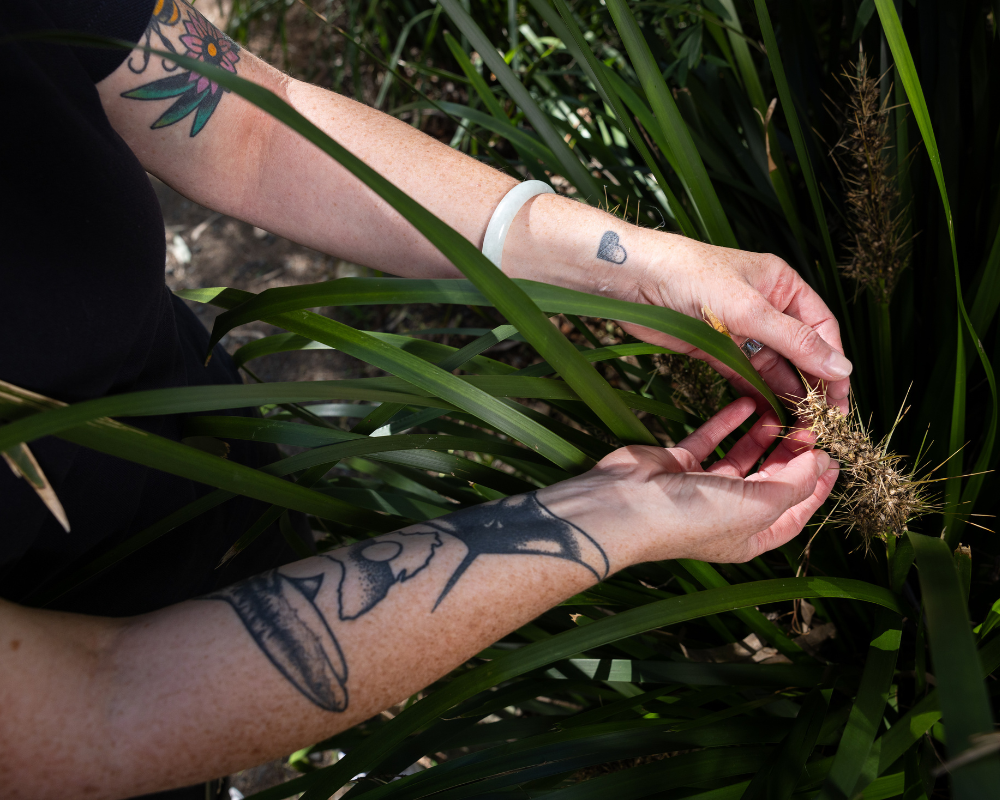 Dr Alana Gall, senior lecturer in Indigenous Traditional Medicine at the National Centre for Naturopathic Medicine, Southern Cross University, with lomandra.
Photo: Anna Warr
The agenda includes a dedicated Indigenous medicine research agenda that sits alongside the global and regional priorities, and describes embedding Indigenous leadership in research as non-negotiable.
"This WHO agenda recognises that Indigenous Peoples must lead research into our medicines, set its priorities and govern how our knowledge is protected,” said Dr Alana Gall, an Indigenous woman, researcher and senior lecturer in Indigenous Traditional Medicine at the National Centre for Naturopathic Medicine, Southern Cross University, and member of WHO's expert editorial committee.
“The test now is whether governments and funders put that into practice, with Indigenous governance and knowledge protections in place before research begins. I hope this agenda drives much-needed change in global and national policy and law," said Dr Gall.
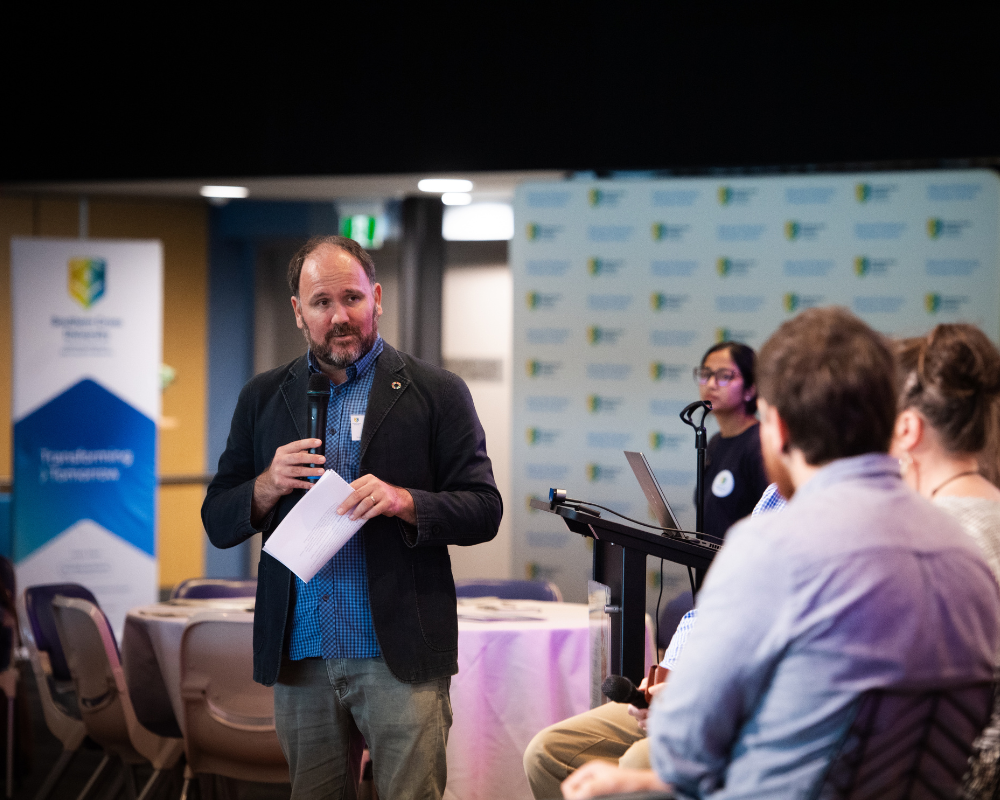 Professor Jon Wardle, Foundation Director of the Southern Cross University National Centre for Naturopathic Medicine, speaking at the Natural Product Futures Forum.
WHO said research priorities have not matched the evidence governments need for decisions on regulation, safety, service delivery and financing. The agenda sets those priorities, with evidence on individual therapies set to come from the studies they guide.
"Researchers in this field have long known where the evidence gaps are, and we've been working to close them,” said Professor Jon Wardle, Foundation Director of the Southern Cross University National Centre for Naturopathic Medicine.
"This agenda gives that work a shared global framework for building evidence governments can act on."
Media contact
Keep reading
/514x0:1487x973/prod01/channel_8/media/scu-dep/news/images/2026/Woman-with-Quit-written-on-her-hand-credit-RDNE-on-Pexels-6003530-2000X973.jpg)
/484x0:1516x1032/prod01/channel_8/media/scu-dep/news/images/2026/Inna.jpg)
/484x0:1516x1032/prod01/channel_8/media/scu-dep/news/images/2026/Jasmine-Hawkins-1.jpg)
/484x0:1516x1032/prod01/channel_8/media/scu-dep/news/images/2026/Herbs_National-Centre-for-Naturopathic-Medicine_20230406---2000px-x-1032px.png)
/514x0:1487x973/prod01/channel_8/media/scu-dep/news/images/2026/Image-AI-for-Conference-supplied-by-Laura-Millhouse-2000X973.jpg)
/484x0:1516x1032/prod01/channel_8/media/scu-dep/news/images/2026/christian-swann.jpg)
/484x0:1516x1032/prod01/channel_8/media/scu-dep/news/images/2026/Amie-Steel.jpg)
Melbourne graduates shine bright
/484x0:1516x1032/prod01/channel_8/media/scu-dep/news/images/2026/SCU-News-Web-Banner-Template-2000-X-1032-px-3.jpg)
/514x0:1487x973/prod01/channel_8/media/scu-dep/news/images/2026/CCYP-at-ISPCAN-Congress-20260825_133007-2000X973.jpg)
/514x0:1487x973/prod01/channel_8/media/scu-dep/news/images/2026/Tinned-tuna-credit-Towfiqu-Barbhuiya-on-Pexels-3440682-14426299-2000X973.jpg)