


Share
Two shipping containers that support Southern Cross University's world-first research into protecting the Great Barrier Reef from marine heatwaves have been transformed into large-scale public artworks by Coffs Coast high school students.
Woolgoolga High, Coffs Harbour High, Maam Giingana Gumbaynggirr and Toormina High students teamed up with local artists and the University's scientists to transform the shipping containers into murals about Marine Cloud Brightening and the Great Barrier Reef.
MAIN IMAGE (l-r): Dr Sophia Ellis, Research Associate in the Marine Cloud Brightening team; Dr Peter Butcherine, Research Fellow in the Marine Cloud Brightening team; Sevak Singh, Year 9 Woolgoolga High student; Kobe Halakas, Year 9 Woolgoolga High student; Professor Daniel Harrison, Marine Cloud Brightening project leader; Grace Willman, Year 9 Woolgoolga High student; Ari Laffey, Year 9 Woolgoolga High student; Madaleine Rogers, Science teacher at Woolgoolga High; John Thiering, artist.
The murals are the result of the Youth ART+SCIENCE project, run by Southern Cross University's TOATL Cooling and Shading team, based at the University's National Marine Science Centre in Coffs Harbour.
Students from Woolgoolga High, Coffs Harbour High, Maam Giingana Gumbaynggirr (an Indigenous not-for-profit school) and Toormina High worked alongside local artists Brentyn Lugnan and John Thiering to design and paint artworks inspired by the Marine Cloud Brightening research.
The containers form an important part of the team's Marine Cloud Brightening research field operations, housing the seawater cannons and the generators that power them.
Each field trip sees the containers travel with the project to be loaded onto the ships that head out to the Great Barrier Reef, meaning the students' artwork will be seen by communities well beyond the Coffs Coast as a public face of nationally and internationally significant environmental research.
Project leader Professor Daniel Harrison said he was thrilled to see the creative and colourful artworks come to life.
"Our research brings together atmospheric science, engineering, climate modelling, marine science and community engagement,” said Professor Harrison.
“Seeing these students interpret that work through art has been a highlight for our team. These containers will now carry the students’ ideas, and their pride in the Coffs Coast region, wherever the research takes us.
“The murals will certainly be a talking point and I can’t wait to tell the inspiring story behind it.”
“These containers will now carry the students’ ideas, and their pride in the Coffs Coast region, wherever the research takes us.”
From classroom to container
The project began in a classroom at the National Marine Science Centre, where around 80 students from five high schools (including Nambucca High) learned about the importance of reef ecosystems and the science behind the Marine Cloud Brightening trial on the Great Barrier Reef.
“The students were absolutely fantastic and really engaged,” said Dr Peter Butcherine, a former teacher who does atmospheric analysis for the Marine Cloud Brightening project.
“We presented the relatively complex science linking the ocean and the atmosphere and also stressed the importance of managing the reef environment, in particular the Great Barrier Reef, and the reason behind the marine cloud brightening intervention.
“Not everyone is built for being a scientist. This sort of engagement project allows those students who aren't so engaged with the science to actually have a voice and feel listened to, and they are able to contribute back in a meaningful way into their different communities.”
Back at their various schools, the students developed mural concepts with the artists. They were mentored by two Coffs Coast artists: acclaimed Gumbaynggirr man Brentyn Lugnan who is well-known for his public art, rugs, murals and graphic designs; and John Thiering, a visual artist, painter, and live sand performer.
Brentyn said giving the students ownership for the design and aesthetics of the murals was important.
“The fact that they were able to achieve something like this is a testament to their perseverance and just getting it done,” he said.
“What I really enjoyed in the workshops was watching the dynamic shift, where the quiet artists get their moment to shine. I'm pleasantly surprised at the lack of ego that I saw amongst the kids. People expect if you put a bunch of teenagers together, they're going to carry on, but these guys have been so focused.”
John said it was a real pleasure being part of the project.
“The students were genuinely curious about the science behind the project, and they made a fantastic commitment in learning how to communicate these ideas through art,” he said.
“I was extremely impressed with how engaged they were, from the initial design workshops to the painting of the containers.”
By early November the containers moved out of storage to arrive at Woolgoolga High. The artists set to work to paint the outlines. Then students from Woolgoolga High and Coffs Harbour High took up their brushes over several days of onsite painting sessions under the artists' guidance.
Artwork at sea
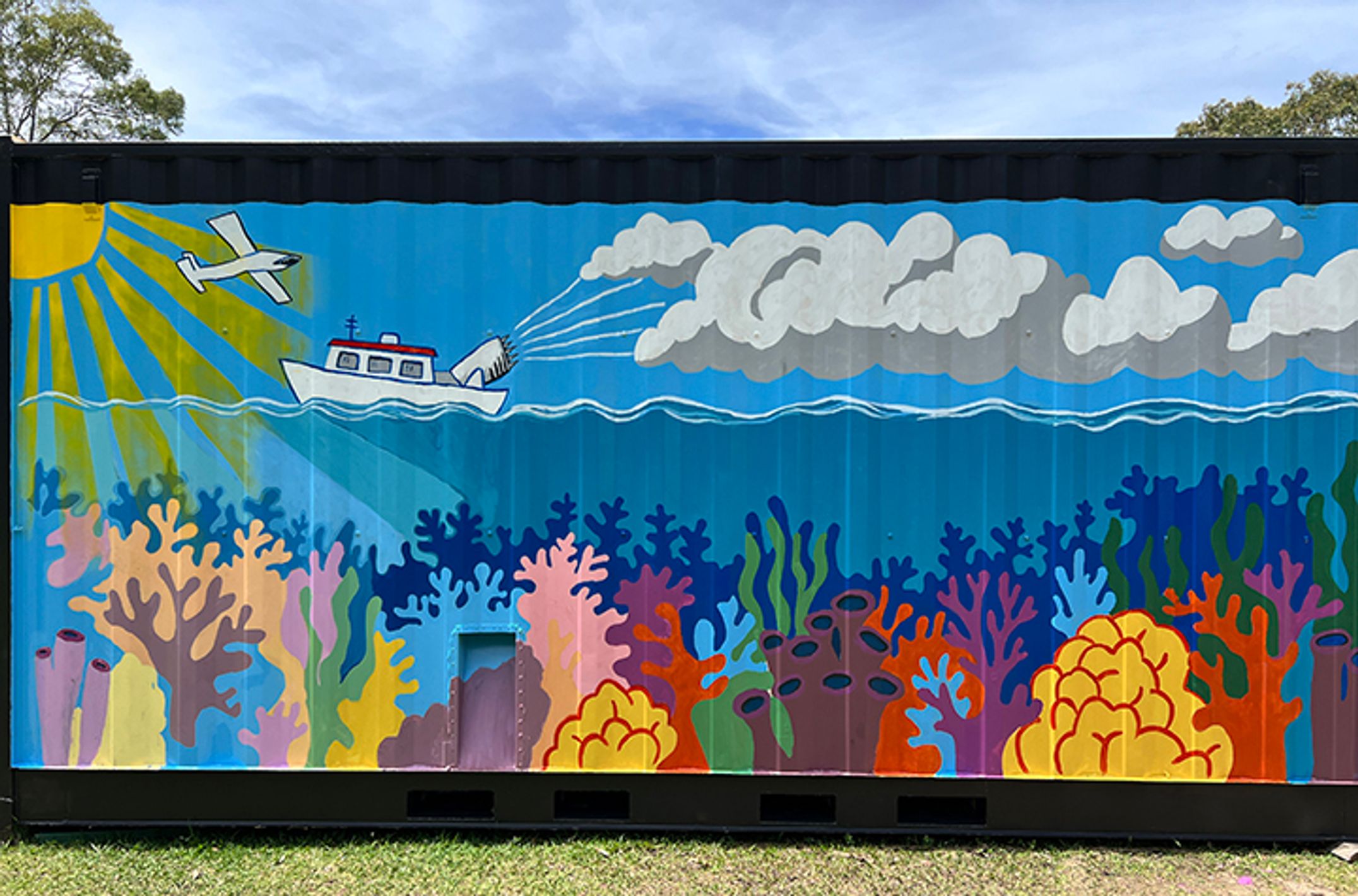
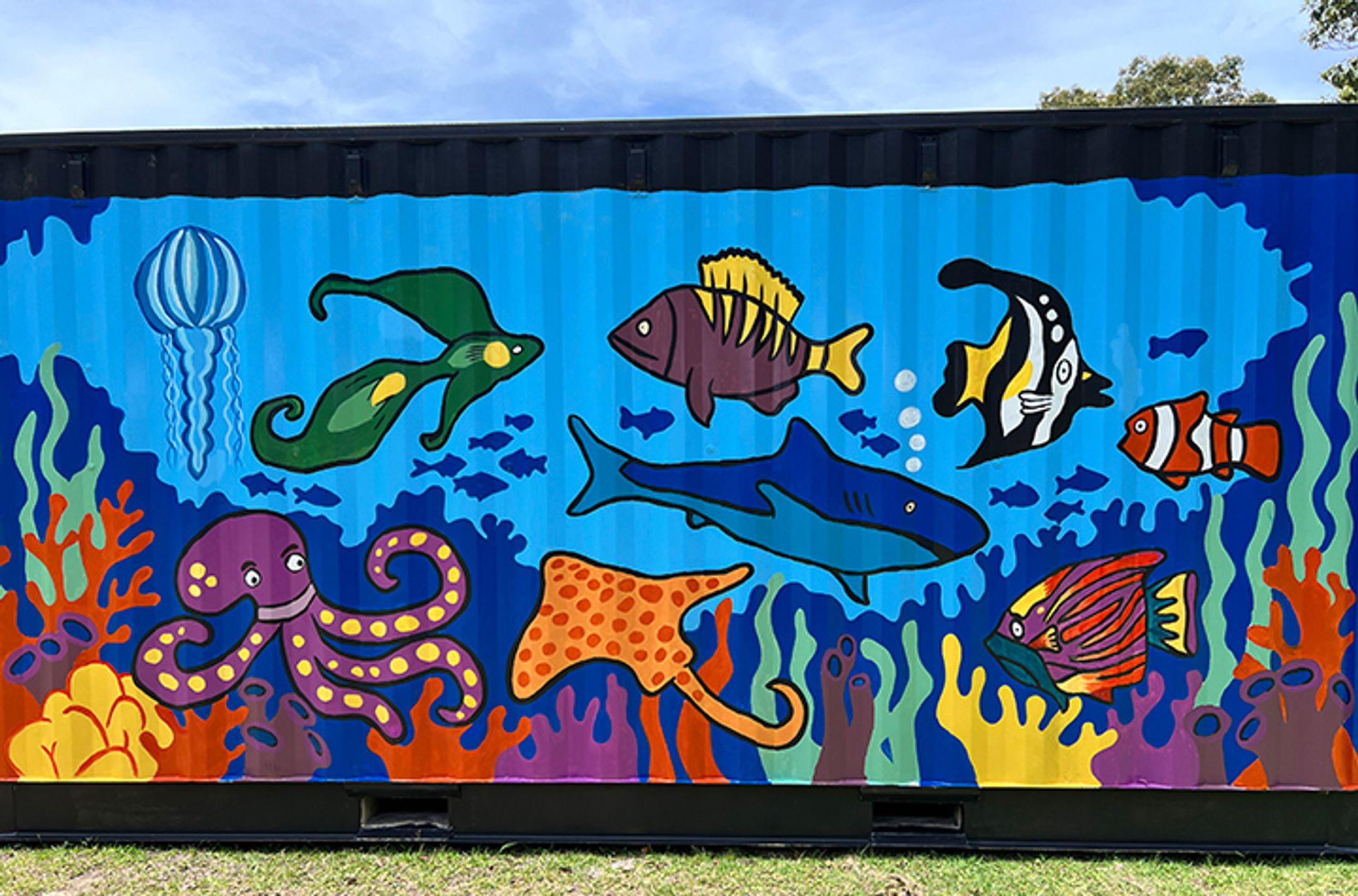
The artwork on each shipping container measures 6m wide x 2.5m high. One features an underwater scene of marine animals like octopus, fish, shark, sting rays and corals (Thriving Reef and Marine Life concept). The other mural, a Coral Clouds and Reef Protection concept, shows Marine Cloud Brightening in action during a hot summer, with a cannon spraying a mist of seawater into the air towards the clouds, shading a coral reef below.
Woolgoolga High School Principal Lu Nickell said the project was a collaborative effort.
"It's given our students a rare chance to work with real scientists and professional artists on something that matters, both for the reef and for our community. They have shown enormous creativity, teamwork and confidence," she said.
"It was wonderful to see our students working together to create this beautiful, functional artwork. I know this is an experience they will remember."
Sevak Singh, a Year 9 Woolgoolga High student, said it’s been a fun and rewarding experience learning science and art techniques.
“I know how cloud brightening works now. I know how coral bleaches now. So I definitely learned a lot of things here,” said Sevak.
“Some students came up with AI fishes, some with fighter jets. So it was a really diverse collection the artists got to choose from for the mural. It comes together at the end and shows you how art and science can be used to show people about our world and our impact on the world.
Dr Sophia Ellis from the TOATL Cooling and Shading team has been involved with the Youth ART+SCIENCE project from concept through to the finished murals.
“It's been a really rewarding experience for me because the students have been so engaged throughout. We also got handwritten thank you notes from the Woolgoolga High students, which was really lovely,” said Dr Ellis.
“What is so special about this project, is that even though the painting is now complete, these containers will travel onto the Great Barrier Reef in future field campaigns, and so there is the chance that a lot of people will see this work.”
What is Marine Cloud Brightening?
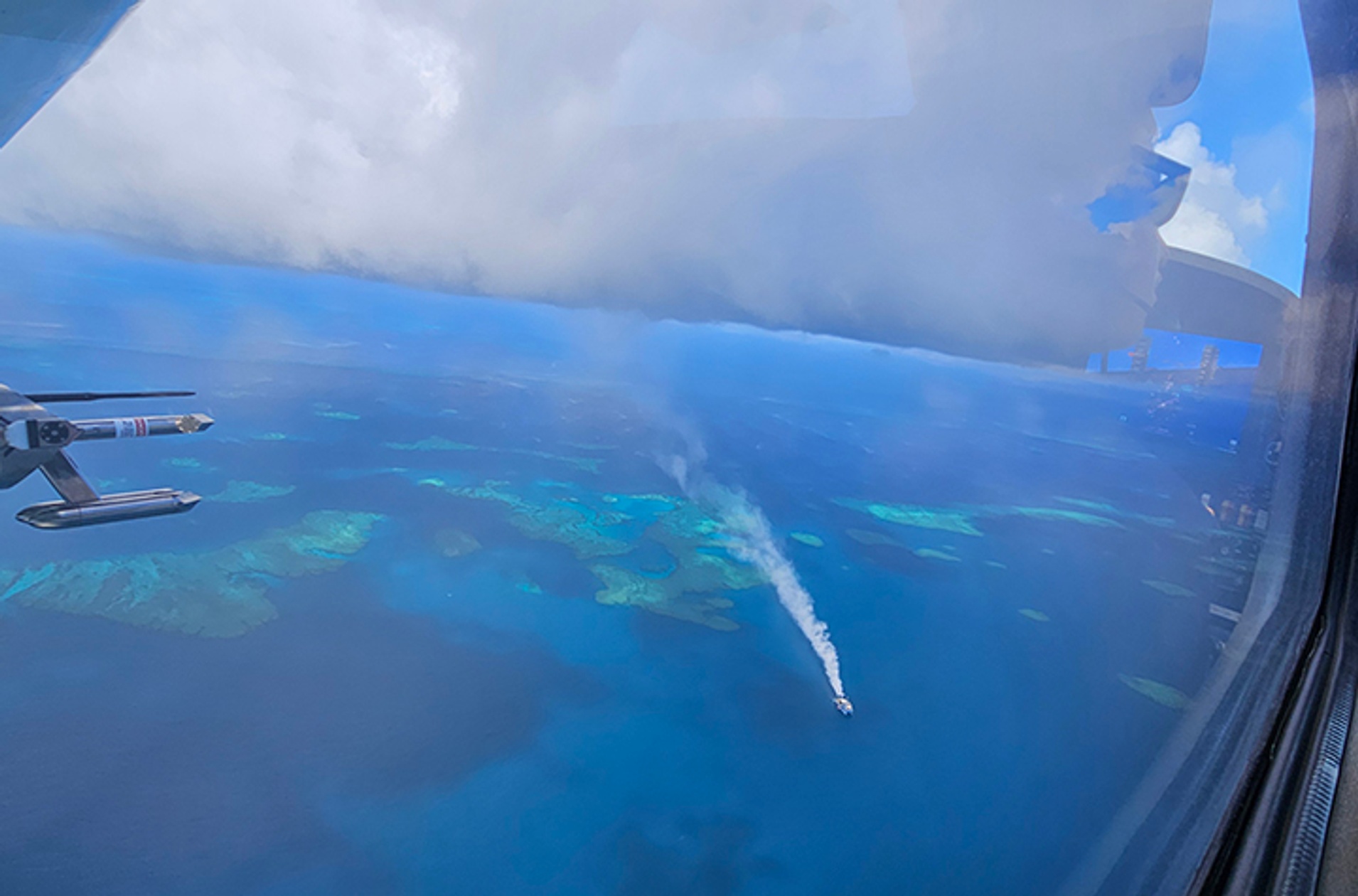
Southern Cross University’s Marine Cloud Brightening on the Great Barrier Reef is an innovative research concept that builds on a natural process. It involves spraying a fine mist of seawater into the air using specialised spray technology. As the mist rises, tiny sea salt particles may interact with low-lying ocean clouds, making them brighter and more reflective.
Brighter clouds can reflect more sunlight back into space, reducing the amount of heat reaching the ocean surface below. The aim is to lower water temperatures and heat stress during extreme heat events, helping corals survive marine heatwaves and bleaching.
Southern Cross University’s work is a research trial focused on technology development, environmental monitoring, modelling and risk assessment, to understand whether the approach could be feasible, safe and useful in the future. Marine Cloud Brightening is not currently deployed as a coral reef intervention.
Learn more about Marine Cloud Brightening at scu.edu.au/mcb
Science literacy and local ownership
Southern Cross University’s Youth ART+SCIENCE project is part-science education, part-creative workshop. It introduces young people to the broad and sometimes unexpected disciplines involved in scientific research, while using art as a powerful tool for science communication.
The project is designed to support science literacy, encourage youth participation in environmental conversations and build community awareness of future climate resilience strategies. Importantly, it also helps embed local ownership of this world-leading research in the University's home region of Coffs Harbour.
Media contact
Sharlene King, Media Office at Southern Cross University +61 429 661 349 or scumedia@scu.edu.au
Keep reading
All Media ReleasesStudent artists bring reef-cooling science to life on Coffs Coast research containers
Students take their learning global in Indonesia
From climate resilience to AI innovation, researchers RISE to the challenge
Regional Leaders Academy grows Northern Rivers talent pipeline
An Honours year in Innovation powers smarter sustainability solutions
How water bugs led Dr Brendan Cox to a PhD
Hard to crack, harder to grow: Southern Cross and Jeju tackle Korea’s macadamia and coffee challenge
Centenarian ‘earthworm of the sea’ at risk of overfishing
Clarence River's largest ever sediment survey delivers baseline results
Melbourne graduates shine bright