

From restoring coral reefs and protecting endangered species to improving flood resilience and harnessing the power of artificial intelligence, Southern Cross University's emerging researchers are tackling some of the world's most pressing challenges.
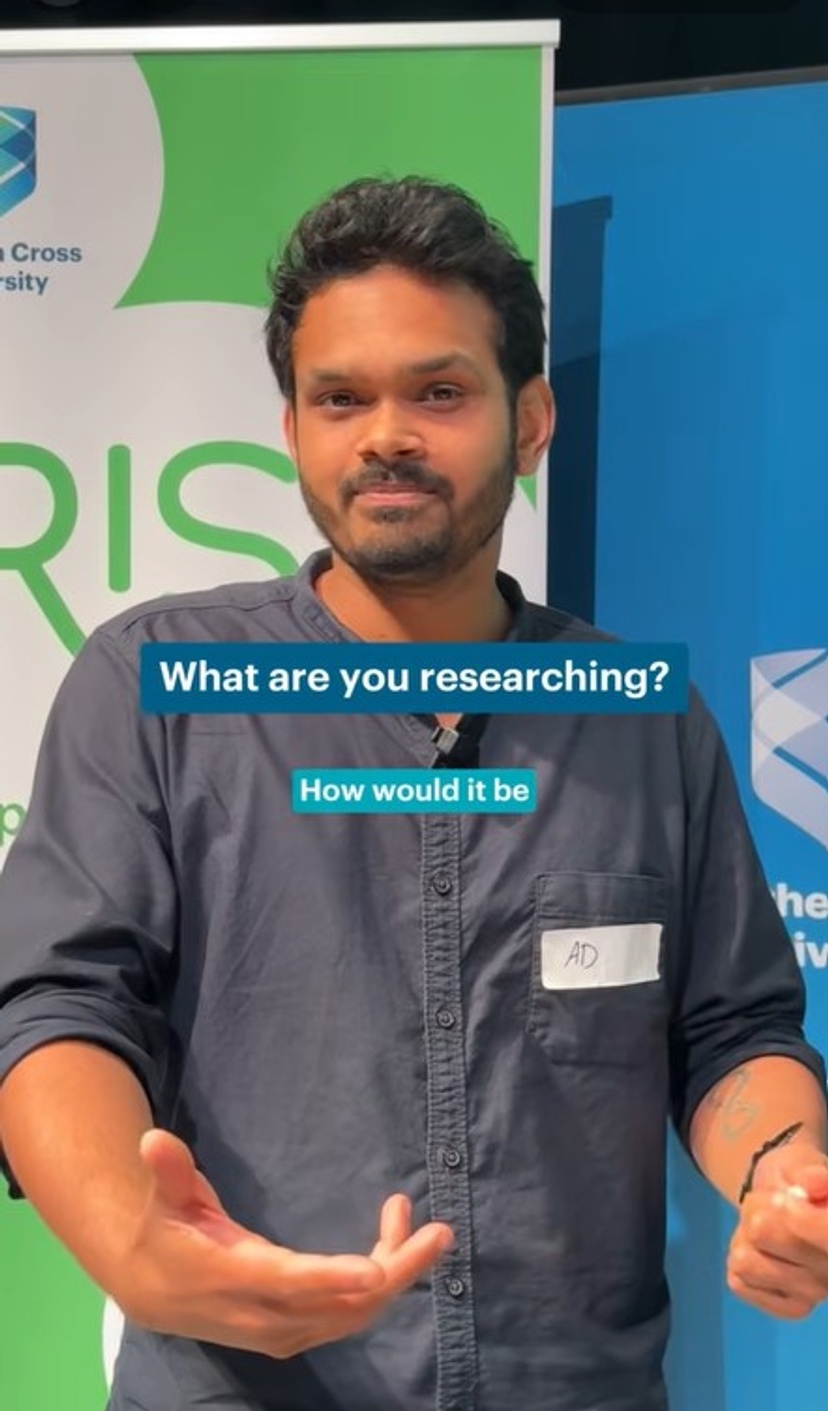
How good it'd be if you could power your fridge with your food scraps? And that is exactly what I'm doing. Biowaste to energy, or bioenergy. I'm researching ways that we can use digital technology to find ways to quantify materials like hardwood timber in flood-affected buildings in the north coast of New South Wales in order to preserve those materials and divert them from landfill. I'm working with the production of fatty acids with marine microalgae. So until now what's happening is everyone knows that we need omega-3s for our brain and for our heart, uh, but the main source is from the fish oils. So I'm trying to grow marine microalgae and then extract the fatty acids like EPA and DHA from them. I'm doing a research study with the tea tree industry, uh, on a fungal pathogen, Colletotrichum, which is associated with severe defoliation in the plantations, and we are working with the tea tree breeding program to introduce resistance to this pathogen. I'm researching different virtual reality settings on teaching construction workers, um, how to train in virtual environment. Uh, I'm researching greenhouse gas emissions from Australian drylands, specifically trying to establish a baseline for what's happening in Australian floodplains and river channels in an under-researched area.
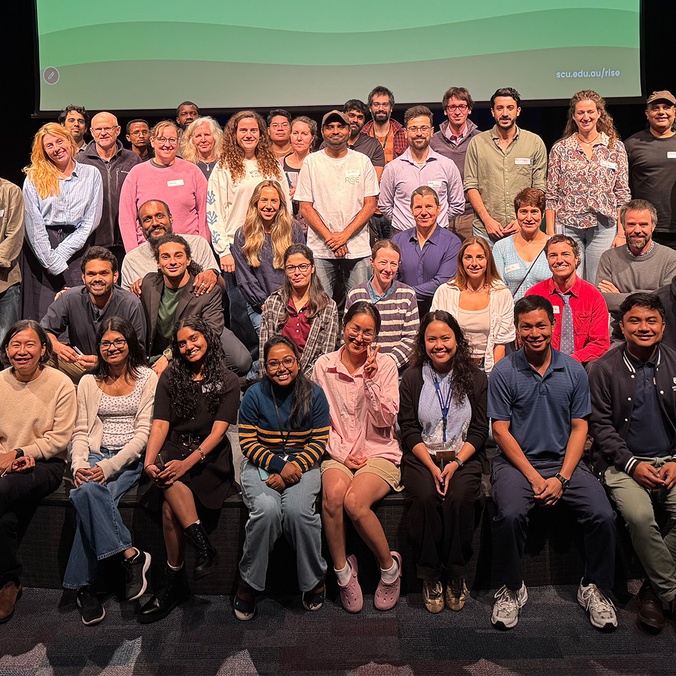
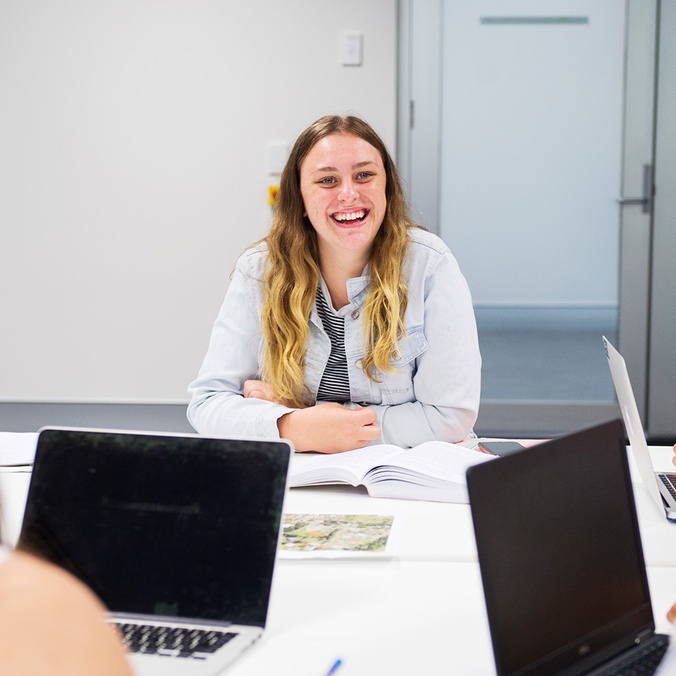
More than 30 postgraduate researchers gathered this week for the 15th annual Research in Information-Technology, Science and Engineering (RISE) Conference, showcasing innovative projects with the potential to deliver meaningful benefits for communities, industries and ecosystems in Australia and beyond.
Held across the University's Lismore and Coffs Harbour campuses, the two-day conference provided a platform for Higher Degree by Research candidates to share new discoveries, test ideas and demonstrate the real-world impact of their work.
RISE Acting Chair, Leslie Galstaun, said the student conference is a celebration of the diversity of postgraduate research taking place at Southern Cross University.
“It introduces the idea of conferences to students and helps build presentation skills,” Leslie said.
“The best part is seeing people come one stage looking nervous and then getting more confident and leaning into their role as a subject matter expert.”
Improving skin cancer detection
Among the presenters was Masters by Thesis student Amindu Kumarasinghe, whose research aims to improve the detection of skin cancer using artificial intelligence (AI).
“We often don't have enough real medical images to train skin cancer detection models, so AI can generate extra "synthetic" ones. But not all of them help, and some can quietly make the detector AI worse,” Amindu said.
“I tested how these images are usually judged and I combined them into an algorithm that picks the images that actually improve skin cancer detection and finally turned it into a tool others can use with their own data.
“I hope it helps AI detect skin cancer more reliably, because earlier detection can save lives.”
Real-time monitoring of coral bleaching events
Emerging technologies such as AI are also helping researchers better understand and respond to coral bleaching in some of Australia's most remote reef ecosystems.
Graduate Researcher and RISE presenter Claire Budden is using drones and AI-powered image analysis to monitor coral bleaching at Lord Howe Island Marine Park, examining bleaching events between 2018 and 2025 and investigating the environmental factors that drive them.
“I hope this research will make it easier to conduct real-time, local monitoring of coral reefs and coral bleaching events, particularly in under-studied and hard-to-reach areas,” Claire said.
Drawn to the project’s combination of environmental science and cutting-edge technology, Claire has embraced opportunities to develop new skills throughout her research journey.
“I was interested in this research area because it brings new technologies such as drones and AI to addressing environmental issues,” she said. “I love learning new things and developing new skills. I was able to get my drone licence earlier this year, which was a lot of fun.”
Helping endangered frogs bounce back
For Graduate Researcher Marco Lassandro, the conference provided the opportunity to share his conservation work with two endangered frog species, Mixophyes fleayi (Fleay’s Barred Frog) and Philoria richmondensis (Richmond Mountain Frog).
Marco’s PhD research is investigating methods of population monitoring of these rainforest species, including trialing field audio recordings and using AI to analyse the frequency of frog calls.
“We also have a captive breeding program, and we will soon release these frogs to bolster natural populations and rebuild populations in sites where they went extinct. It’s really meaningful to be assisting species that have been around for millions of years,” Marco said.
“We have a captive breeding program and we will soon release these frogs to bolster natural populations. It’s really meaningful to be assisting a species that has been around for millions of years.”
He said the RISE conference provided an opportunity to learn about other research being conducted across the University.
“It’s great to get a glimpse of what everyone is working on and see the different ideas and fields of research.”
Other projects presented included studies examining greenhouse gas emissions across the Kati Thanda-Lake Eyre Basin, flood-adaptive housing solutions, racehorse welfare, and new approaches to reef and wetland restoration.
Learn more about the Graduate School.
Media contact
Keep reading
From climate resilience to AI innovation, researchers RISE to the challenge


Research excellence takes the stage at Lismore graduation
Regional Leaders Academy grows Northern Rivers talent pipeline