

The traditional classroom is transforming into coral reefs, fish markets, coastal villages and waste management facilities, as learning comes to life.
Over four weeks in eastern Indonesia, 15 Southern Cross University Bachelor of Science and Bachelor of Engineering (Honours) students will take their learning out of the lecture theatre and into the field.
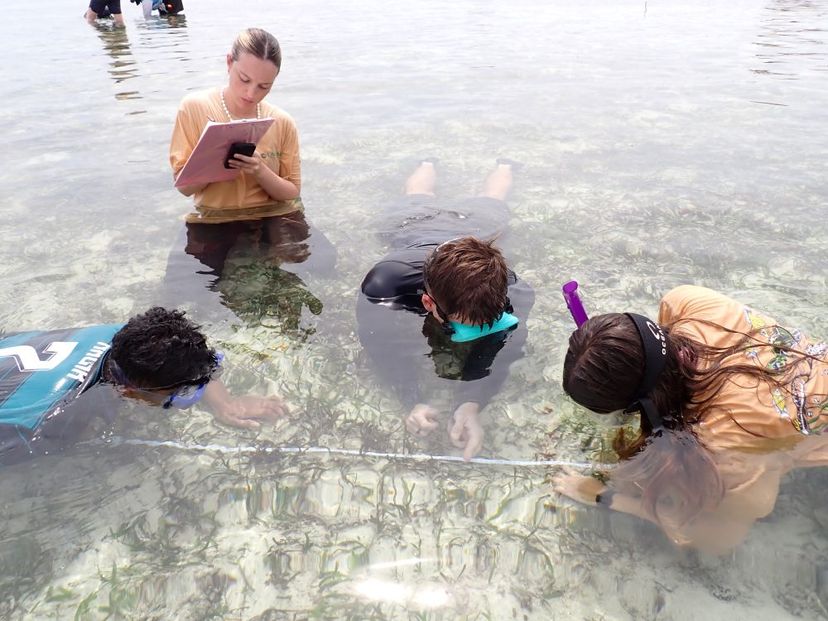
They’ll snorkel reef ecosystems, survey seagrass, plant mangroves, assess marine litter and learn directly from local communities.
Supported by the Australian Government’s New Colombo Plan, the students will spend two weeks at each of Southern Cross University’s partner universities: the University of Pattimura (UNPATTI) in Ambon and the University of Muhammadiyah Sorong (UNAMIN) in Sorong.
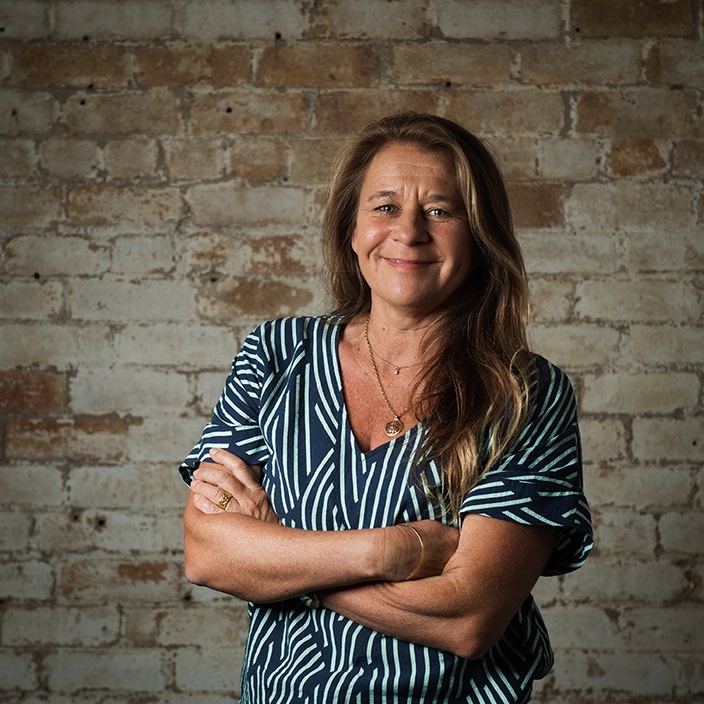
Led by Professor Amanda Reichelt-Brushett from Southern Cross University’s Faculty of Science and Engineering, the program combines hands-on environmental research with cultural learning and collaboration.
Students will experience eastern Indonesia’s extraordinary biodiversity and marine environment first-hand, in a region recognised globally for its coral reefs and fish biodiversity.
“We’ll be very close to the Wallace Line and right in an absolute hotspot of coral reef and fish species biodiversity in the world,” Professor Reichelt-Brushett said.
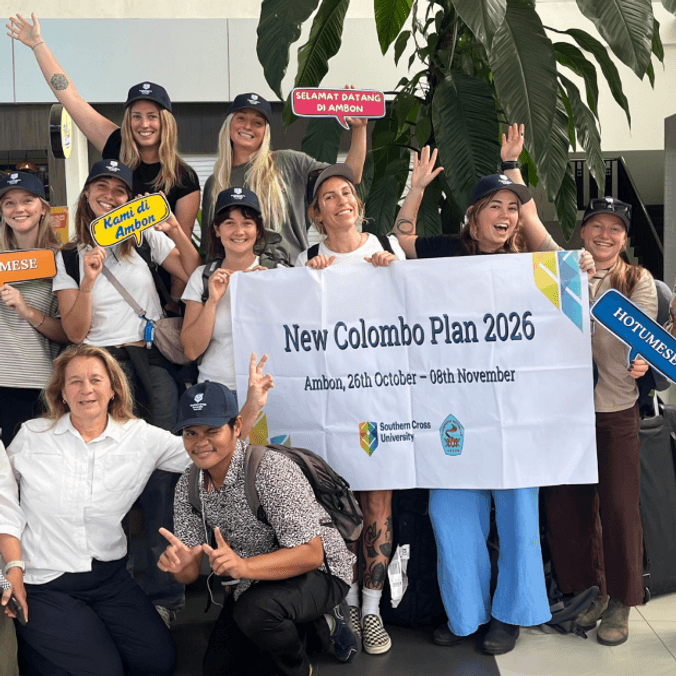
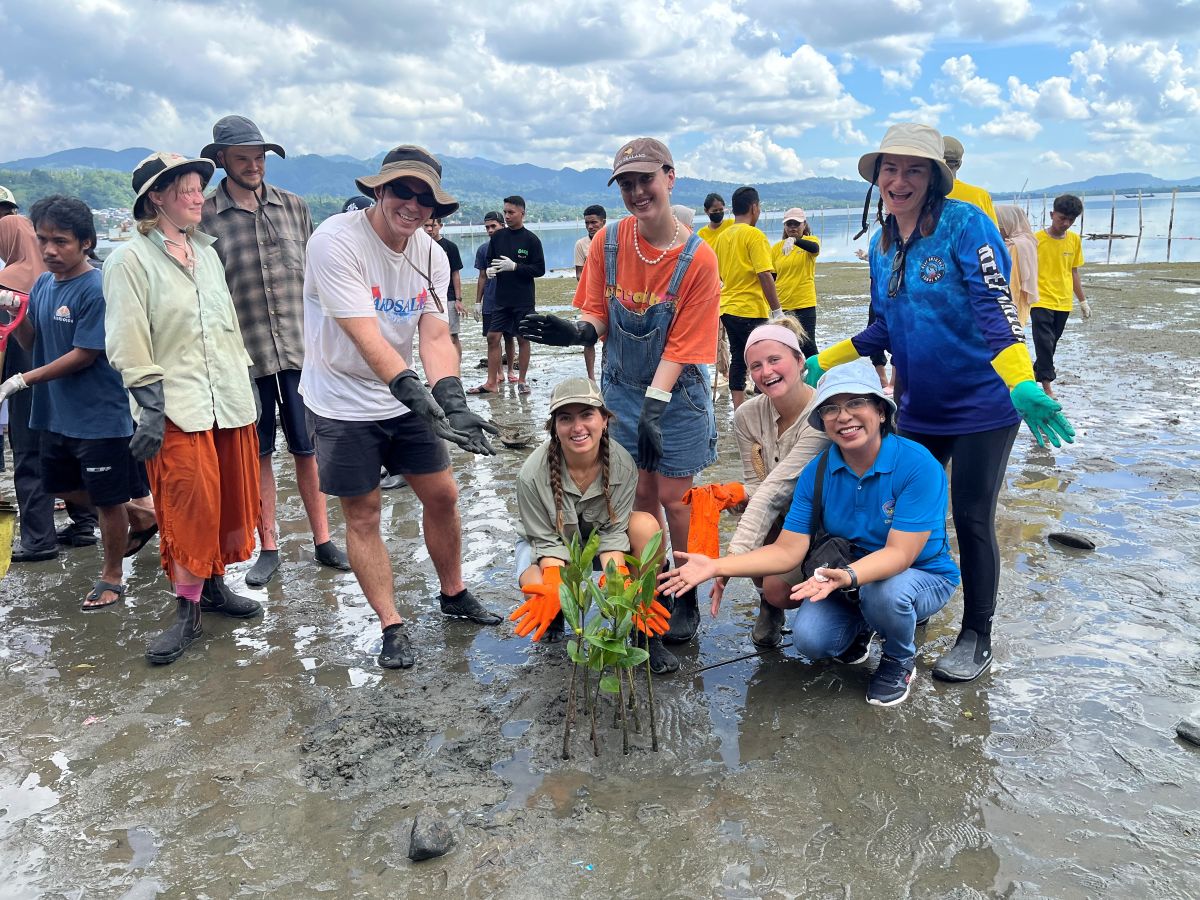 Pictured: Southern Cross University students in Indonesia as part of the 2025 trip and New Colombo Plan program.
Science in the real world
In this region of Indonesia, healthy oceans are closely tied to food security and livelihoods.
Professor Reichelt-Brushett said around 90 per cent of protein resources in this area come from the ocean, making healthy marine ecosystems critical to local communities.
Students will meet community groups and practitioners working across river health, waste management, sustainable tourism and marine conservation to understand the environmental challenges facing the region and the responses underway.
They will put their learning into practice through seagrass surveys, marine litter assessments, mangrove planting and other fieldwork, sharing data and knowledge with local partners. The fieldwork also forms part of an independent study unit, with students receiving academic credit for their work.
“This practical, in-country experience broadens students’ horizons and opens up new ways of thinking. They learn from different approaches to environmental challenges and bring those perspectives home with them. ”
Learning goes both ways
Students will learn the language and culture and work alongside peers from partner universities, share knowledge, learn from each other and build new friendships along the way.
Professor Reichelt-Brushett said during past trips it was rewarding to see the connections that formed between the Australian and Indonesian students, with learning going both ways.
“They build relationships and friendships that are long lasting, not only with their Southern Cross University peers, but also with friends that they develop while they’re in Indonesia as well,” she said.
For Professor Reichelt-Brushett, the aim is to give students an immersive experience that stays with them well beyond the four weeks, building lasting connections and a deeper understanding of one of Australia’s closest neighbours.
Partnerships with a lasting impact
The program builds on Southern Cross University’s strong relationship with the University of Pattimura (UNPATTI) in Ambon and the University of Muhammadiyah Sorong (UNAMIN).
Professor Amanda Reichelt-Brushett said the Indonesian partners were integral to the program, bringing local expertise, research and community connections to the experience.
“Our Indonesian partners make a huge contribution to the success of the program. These relationships give our students the opportunity to really engage with Indonesia and its communities, rather than experience the country simply as tourists,” she said.
The program is supported by the Australian Government Department of Foreign Affairs and Trade through the New Colombo Plan.
Make nature your classroom
Science is about understanding our world and creating real‑world change.
Media contact
Keep reading
Students take their learning global in Indonesia
From climate resilience to AI innovation, researchers RISE to the challenge


Research excellence takes the stage at Lismore graduation
Regional Leaders Academy grows Northern Rivers talent pipeline